Missing Teeth? Implants vs Bridges vs Dentures: Which Is Right for You?
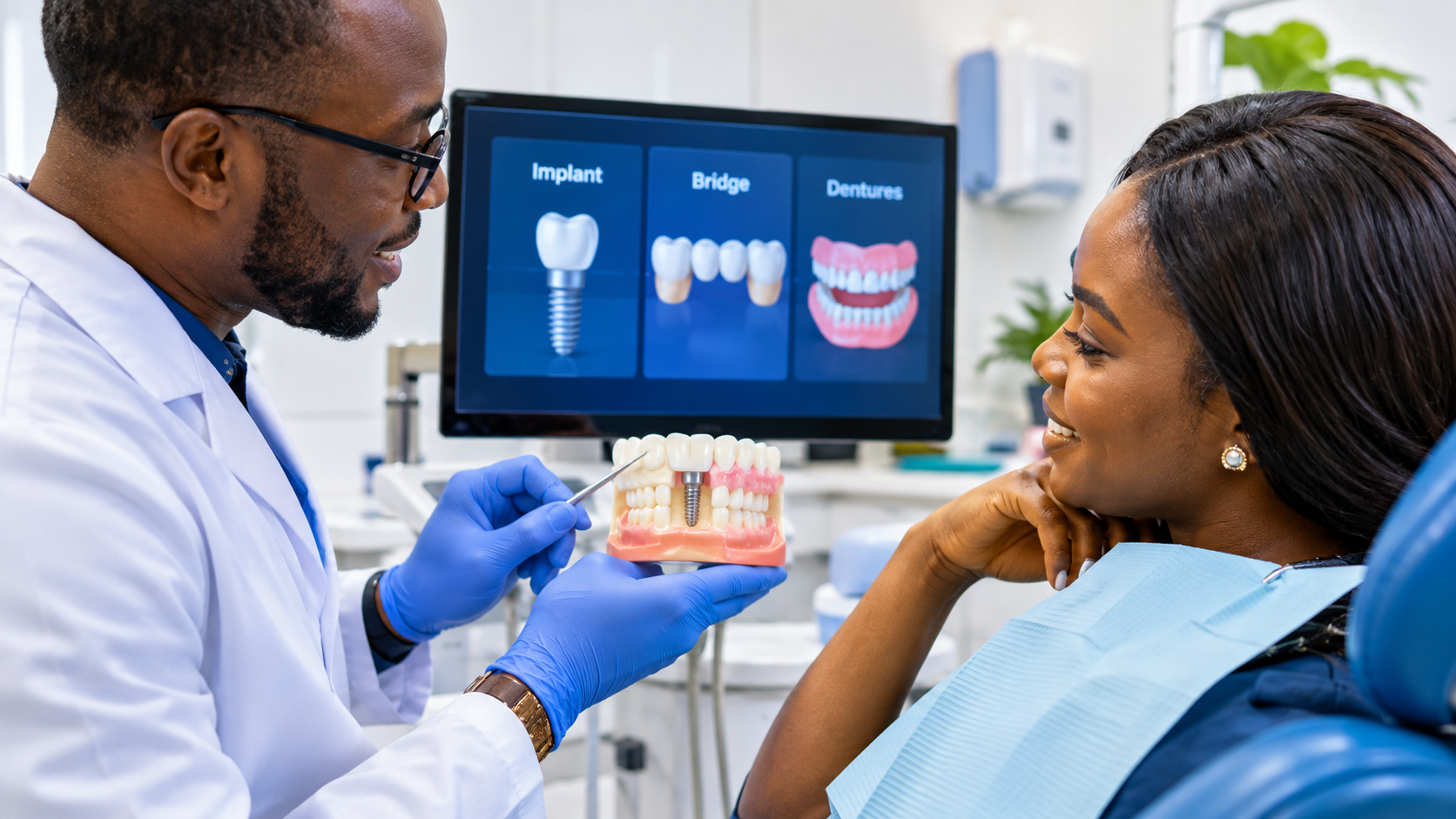
Losing a tooth, whether from decay, gum disease, injury, or age, can knock your confidence and make everyday things like eating and talking harder than they should be. The good news is that modern dentistry offers three well-proven ways to fill the gap: dental implants, bridges, and dentures. Each has its own strengths, costs, and trade-offs. Here is a plain-language guide to help you choose.
Why You Shouldn’t Leave the Gap
It is tempting to ignore a missing tooth, especially at the back of the mouth. But gaps have consequences. Neighboring teeth drift toward the space, your bite shifts, the opposing tooth can over-erupt, and the jawbone beneath the gap slowly shrinks because it is no longer stimulated by a tooth root. Replacing the tooth early protects the rest of your mouth.
What Are Your Options?
Dental Implants: The Closest Thing to a Natural Tooth
An implant is a small titanium (or zirconia) post placed in the jawbone, which acts as an artificial root. Once it has fused with the bone, it is topped with a custom crown.
Why People Choose Them
- They look, feel, and function most like natural teeth.
- They stimulate the jawbone, helping prevent the bone loss that follows tooth loss.
- They stand alone, so neighboring healthy teeth are left untouched.
- With good care, they can last 20 years or more, often a lifetime.
- No slipping, no adhesives, and you can eat nearly anything.
Dental Bridges: A Fixed, Faster Fix
A bridge replaces the missing tooth with a false tooth held in place by crowns on the teeth on either side of the gap.
Why People Choose Them
- They are usually completed within two to three weeks, with no surgery.
- The cost is moderate, lower than implants.
- They are fixed in place, so there is nothing to remove at night.
- They restore chewing ability and appearance well. Most last 10 to 15 years before needing replacement.
Dentures: The Budget-Friendly, Flexible Option
Dentures are removable replacements. Partial dentures fill in several missing teeth, while complete dentures replace an entire arch.
Why People Choose Them
- They are the most affordable option.
- They are non-surgical and relatively quick to make.
- They can replace many or all teeth at once.
- They are easy to repair or adjust.
Your Next Step
The right answer depends on your bone volume, gum health, general health, and budget, and the only way to know is a proper examination. Book a consultation that includes X-rays or a 3D scan, ask for a clear treatment plan with itemized costs, and do not hesitate to get a second opinion, since prices can vary widely between clinics.
A missing tooth is not something you have to live with. Whichever option you choose, replacing it sooner rather than later gives you the best chance of keeping your smile, and the rest of your teeth, healthy for years to come.